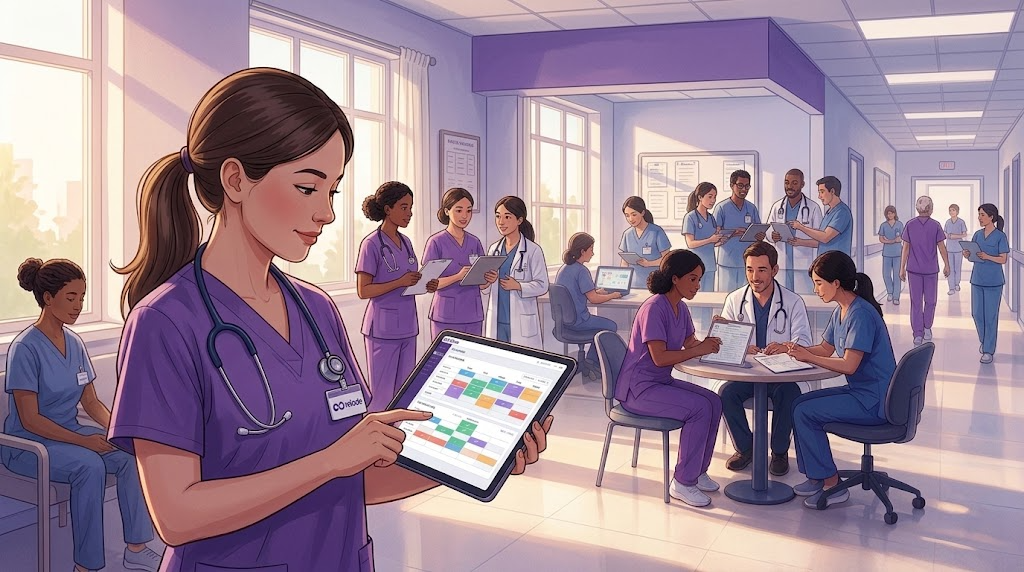
AI Predictive Scheduling Solutions for Healthcare
When I talk to hospital leadership, or leaders of HR and staffing, I always hear the same thing. They recognize the inefficiencies inherent in static spreadsheet-based scheduling and schedule creation based on ‘gut feeling’. If the approach is to only look at filling the gaps created by a staffing shortfall, or to address a staffing surge by engaging a contract labor staffing firm at premium rates, then your best clinicians will be burnt out and workloads will increase while the standard of patient care will rapidly decline.
There’s an important difference between a reactive approach to staffing, and an active staffing strategy. To achieve the latter, you need a smart staffing technology that provides you the capability to predict staffing requirements before the need for a staffing adjustment arises.
There is an important gap in the scheduling software solutions currently available to most staffing teams, which is a gap between staff scheduling and predicting patient acuity. With the Relode software, staffing teams are able to address that gap. We use artificial intelligence to work with your clinical leadership team to predict staffing demand. Staffing demand, coupled with our software, helps staffing teams achieve staffing stability with premium overtime cost savings and a reduction in staffing burnout.
The Challenge: The Unpredictable Clinical Workforce Gap
Understanding how big shifts in the healthcare pipeline contribute to scheduling chaos is the first step toward understanding how much better off proactive scheduling could be. AI can now do a better job than people can at forecasting needs, so there's really no good excuse to wait on using this tool.
Here are a few ways in which AI-powered forecasting can help scheduling:
Unpredictable Patient Acuity and Census Spikes
High Burnout and Premium Labor Exhaustion
Inefficient Shift Distribution
Our Approach: AI-Driven Predictive Scheduling
We feel as though workforce scheduling is most successful when it equally considers the operational needs of a hospital and the well-being of the staff.
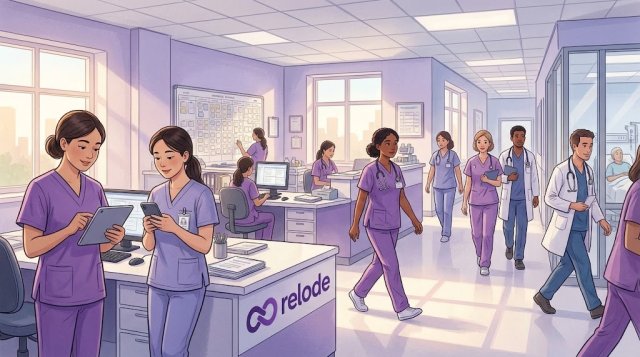
Data-Backed Forecasting
We utilize advanced algorithms to analyze historical admission trends, seasonal surges, and local demographic data to accurately predict patient census days in advance.
Acuity-Based Alignment
We assess shift requirements not just by headcount, but by clinical competencies, ensuring the right mix of specialized skills is always available for your specific unit’s acuity level.
Integrated Workforce Strategy
Our predictive tools are designed to work in tandem with your domestic hiring and staffing efforts, integrating your core staff, float pools, and contingent labor into one cohesive system. You can learn more about how this fits into our broader capabilities by exploring all of our Relode services.
What We Deliver: End-to-End Scheduling Solutions
Demand Forecasting & Capacity Planning
Automated Shift Matching & Fulfillment
Proactive Float Pool Management
Burnout Prevention & Schedule Equity
Client Outcomes: What We Measure
Premium Labor Cost Reduction:
Shift Fill-Rate Improvement:
First-Year Turnover Rates:
Stabilized Patient-to-Provider Ratios:
Partner With a Workforce Planning Specialist
Currently, achieving the right balance of your clinical workforce is not easy. Fast-changing patient volume means the hospital staff workload also moves quickly.
Your nursing managers shouldn't have to fill in all the frantic last-minute scheduling holes, while balancing running units. If your managers are struggling to fill these needs, consider switching how you're approaching it.
Relode has intelligent scheduling technology that will allow your managers to spend more time leading the unit, and less time covering holes in your nursing staff scheduling. Give your managers the tool that takes the burden off their backs and contact Relode. Stop reacting and start leading the staffing of your hospital.