
Hospital Workforce Planning Services
If you are a hospital executive, HR director, or nursing leader, you already know the reality: waiting until a position is vacant to start recruiting is no longer a viable strategy. In today’s healthcare environment, reactive hiring leads to burned-out core staff, overreliance on expensive premium labor, and compromised patient care.
To thrive, health systems must shift from filling empty shifts to anticipating future gaps. Hospital workforce planning is the strategic alignment of your facility’s clinical talent with its long-term operational and clinical goals.
At Relode, our workforce planning services provide a data-driven approach to anticipating your staffing needs. We help hospitals develop reliable talent pipelines, establish forecasting models, and drastically reduce vacancy costs. In this guide, we break down our comprehensive process for building a resilient, future-ready healthcare workforce.
The High Cost of Reactive Hiring
The Nursing Shortage Reality
The demand for registered nurses continues to outpace supply. According to the Bureau of Labor Statistics (BLS), there are projected to be an average of 189,100 RN openings each year between 2024 and 2034. Furthermore, the AACN nursing shortage fact sheet highlights how nursing school enrollment bottlenecks and faculty shortages are limiting the number of new graduates entering the field.
High Turnover and Burnout
According to the 2026 NSI National Health Care Retention & RN Staffing Report, the hospital RN turnover rate currently sits at 17.6%. Every time an experienced nurse leaves, they take invaluable institutional knowledge with them, creating a gap that takes months to effectively fill and onboard.
The Financial Drain of Vacancies
The 2026 NSI report also reveals a national acute-care RN vacancy rate of 8.6%. High vacancy rates force hospitals to rely on premium contract labor and travel nurses, eroding operating margins and straining hospital budgets. A structured hospital staffing forecast is essential to mitigating these premium labor expenses.
Our Data-Driven Planning Process
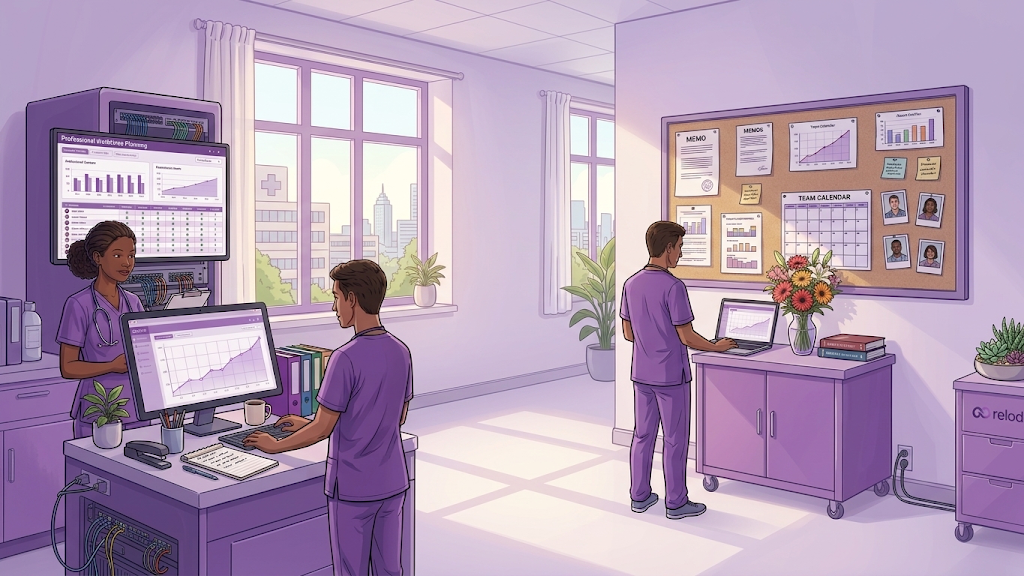
Centralized Staffing Data
Establishing Workforce Planning Committees
Connection to Strategic and Capital Planning
Forecasting and Talent Pipeline Development
Once the data is centralized and leadership is aligned, we execute a proactive strategy to ensure your candidate pipeline never runs dry.
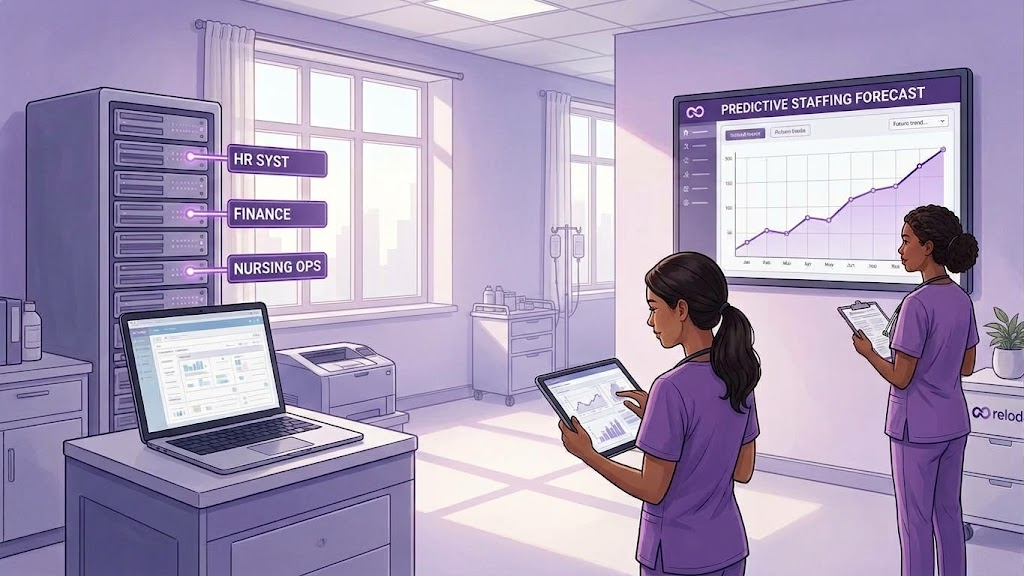
What We Measure: Client Outcomes & Metrics
You cannot improve what you do not measure. Our workforce planning services are rooted in accountability. We track the key performance indicators (KPIs) that directly impact your bottom line and care quality:
Vacancy Cost Reduction: Tracking the direct financial savings of replacing premium contract labor with permanent, core staff.
Time-to-Fill: Measuring the speed at which critical roles are closed, ensuring your units are never left understaffed for prolonged periods.
Turnover Rates: Monitoring both new-hire retention and overall hospital RN turnover to ensure our pipeline is delivering culturally aligned, long-term talent.
Pipeline Health: Evaluating the number of qualified, engaged passive candidates ready to step into highly specialized roles (e.g., ICU, ER, OR).
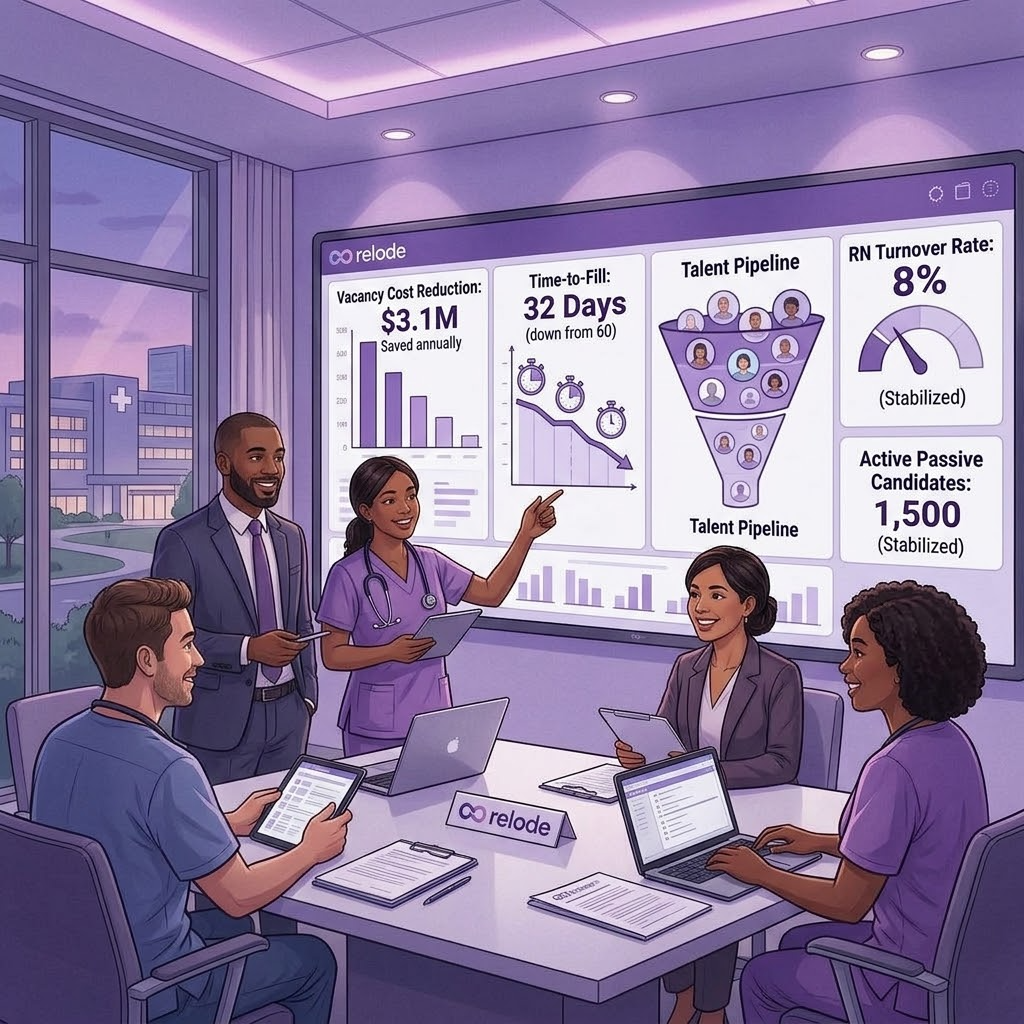
By stabilizing core staffing, our clients routinely see millions of dollars in premium labor cost reduction and significantly improved employee engagement scores.
Frequently Asked Questions
Q: What is hospital workforce planning?
A: Hospital workforce planning is the strategic, data-driven process of analyzing a health system's current workforce, forecasting future clinical and operational needs, and executing targeted recruitment and retention strategies to ensure the facility always has the right staff, in the right roles, at the right time.
Q: How do you reduce RN turnover?
A: Reducing RN turnover starts before the hire is even made. By utilizing proactive talent pipeline development, we ensure candidates are a strong cultural and clinical fit. We also integrate data-driven insights to improve onboarding, offer competitive compensation benchmarking, and foster supportive environments that prevent burnout among your core staff.
Q: What is the current nursing vacancy rate?
A: According to the 2026 NSI National Health Care Retention & RN Staffing Report, the current national acute-care RN vacancy rate is 8.6%. High vacancy rates directly correlate with an increased reliance on expensive contract labor and heightened burnout among remaining staff.
Q: How can hospitals forecast staffing needs?
A: Hospitals can forecast staffing needs by centralizing their HR, finance, and operational data. By analyzing historical turnover rates, upcoming retirements, seasonal patient volume trends, and future strategic facility expansions (such as opening a new wing), leadership can build predictive models to source talent proactively.