

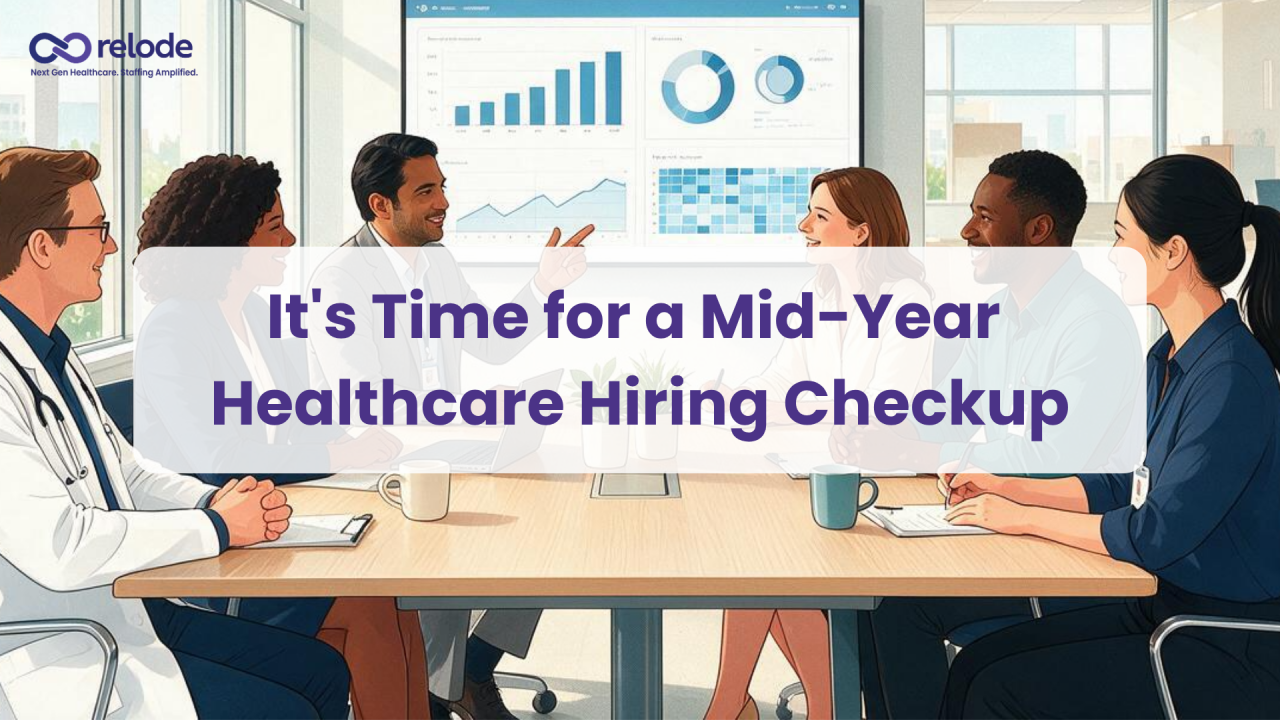
As we move into the second half of the year, healthcare organizations have a valuable opportunity to pause and evaluate their hiring strategies. The first six months often reveal what's working, what's falling short, and where adjustments can make the biggest impact before the busy fall and winter seasons.
Healthcare hiring doesn't stand still. Candidate expectations evolve, workforce needs shift, and competition for top talent remains high. Organizations that take time to assess their recruitment efforts now will be better positioned to attract and retain quality candidates in the months ahead.
The second half of the year moves quickly.
As summer winds down, healthcare organizations begin preparing for increased patient volumes, year-end initiatives, budget planning, and 2027 workforce goals. Waiting until the fall to address hiring needs can leave organizations competing for the same limited talent pool.
Now is the time to evaluate your workforce strategy, strengthen your talent pipeline, reconnect with qualified candidates, and identify critical hiring needs before they become urgent.
Organizations that plan ahead are often able to hire more strategically, reduce vacancy rates, and enter the final months of the year with greater confidence.
Time-to-fill is an important metric, but it doesn't tell the whole story.
Ask yourself:
Measuring quality of hire alongside hiring speed provides a more complete picture of your recruiting success.
Today's healthcare professionals have options, and the hiring experience often influences where they choose to work.
Consider your process from the candidate's perspective:
Even candidates who don't receive an offer can become future applicants—or recommend your organization to others—if they have a positive experience.
Every hiring process has friction points.
Review where candidates are dropping out or where positions are taking longer than expected to fill. Delays may stem from lengthy interview processes, slow decision-making, or unclear job descriptions.
Small improvements in these areas can significantly reduce vacancy time while improving the overall candidate experience.
Successful hiring doesn't end when an offer is accepted.
Strong onboarding, mentorship opportunities, career development, and supportive leadership all contribute to employee satisfaction and retention. Retaining great employees reduces future hiring needs and helps create a more stable workforce.
Hiring and retention should always be viewed as part of the same workforce strategy.
The second half of the year is the perfect time to take a step back and ask an important question: Is your hiring strategy setting you up for success through the rest of the year?
By planning ahead, evaluating your recruitment process, improving the candidate experience, and investing in retention, healthcare organizations can position themselves for stronger hiring outcomes while creating a better experience for both candidates and hiring teams.
At Relode, we believe successful hiring starts with thoughtful planning, strong partnerships, and connecting healthcare organizations with exceptional talent. The work you do today can help build a stronger, more resilient workforce for the months ahead.