
Advanced Practice Provider Staffing for Growing Care Teams
Healthcare organizations are under pressure to expand access to care while building clinical teams that can meet patient needs, specialty requirements and operational demands. For hospitals, clinics and health systems, advanced practice providers (APPs) can be an important part of that strategy—but successful APP staffing starts with defining the work, not simply choosing a title.
The U.S. Bureau of Labor Statistics projects employment of nurse practitioners (NPs) to grow 40.1% from 2024 to 2034 and physician assistants (PAs) to grow 20.4% over the same period. BLS also identifies growing reliance on NPs and PAs within team-based care as a factor supporting demand for these clinicians.
The APP Workforce Opportunity
That flexibility is valuable—but it also makes role definition especially important. A growing primary care clinic may need an NP with experience managing chronic conditions and preventive care. A surgical service may need a PA who is comfortable with inpatient rounding, perioperative care and first-assist responsibilities. A behavioral health organization may need an APP with specific psychiatric experience. A health system expanding telehealth may need clinicians who can deliver care remotely while meeting applicable licensure requirements.
These are different workforce problems, even when the job title is simply “APP.” The goal should be to build a role around patient need + specialty + state rules + team structure + actual work.
NP and PA Recruiting: Start With the Clinical Need
NPs and PAs are distinct professions with different educational pathways, professional identities and regulatory frameworks. Organizations should therefore avoid treating the titles as interchangeable by default.
Ask:
- What patient population will this clinician serve?
- What conditions will they evaluate and manage?
- What procedures, diagnostics or treatments will they perform?
- What specialty experience is required?
- Which responsibilities are independent, collaborative or delegated within the organization's model?
- Who will the clinician work alongside?
- What physician, nursing, behavioral health or ancillary support will be available?
- Is the need permanent, temporary, seasonal or tied to a specific growth initiative?
- What must the clinician be able to do on day one?
These questions can help determine whether the organization needs an NP, PA or another appropriately qualified APP—and what specific qualifications should be included in the search.
This is also why APP recruiting should not be framed as finding a “cheaper physician.” The objective is not to substitute one title for another. It is to design an appropriate clinical role and identify a qualified professional whose education, experience, licensure and capabilities align with that role.
State-Specific Scope and Licensing Considerations
APP recruiting also requires attention to state-specific laws and licensing requirements. NP practice environments differ across states. AANP categorizes state NP practice environments as full, reduced or restricted practice, reflecting differences in what state law permits and whether collaboration, supervision or other requirements apply.
PA practice is likewise governed by state laws and regulations. AAPA notes that PA practice laws are established at the state level and provides state-specific practice resources.
Before recruiting, organizations should verify requirements such as:
- State licensure and eligibility
- National certification
- Prescriptive authority, where applicable
- Collaborative or supervisory requirements
- Scope of permitted clinical activities
- Facility credentialing requirements
- Privileging requirements
- Specialty-specific qualifications
- Telehealth and multi-state practice considerations, when relevant
The specific requirements should be confirmed with the applicable state licensing boards and the organization's credentialing and legal teams. State rules can change, so recruiting criteria should be reviewed for the jurisdiction in which the clinician will practice.
Permanent or Flexible Staffing Based on the Need
Not every APP staffing requirement has the same timeline. A health system opening a new service line may need a permanent clinician who can become part of the long-term care team. A clinic experiencing a temporary surge in volume may need additional coverage while demand stabilizes. An organization with an open permanent position may need interim coverage while recruitment continues.
Relode supports both direct hiring and contingent staffing, including contract and locum opportunities. Its candidate-matching model is designed to support organizations that need permanent staff as well as those that need temporary coverage while a longer-term solution is developed.
Permanent staffing may make sense when the role represents sustained patient demand, a new service line or a long-term addition to the care team.
Locum or contract staffing may make sense when an organization needs interim coverage, is managing a temporary increase in volume, or wants flexibility while evaluating longer-term workforce requirements.
A blended strategy may be appropriate when temporary coverage is needed immediately while a permanent APP search continues.
Define the Care Model Before Defining the Title
One of the most common mistakes in APP recruitment is beginning with a title and working backward. A better process starts with the care model.
Consider an outpatient specialty clinic that wants to increase appointment capacity. The organization might initially describe the opening as an “APP position.” But the actual requirements could include managing follow-up visits, evaluating new patients within defined clinical protocols, ordering and interpreting diagnostic testing, managing medications, coordinating care with physicians and other clinicians, performing specific office-based procedures, participating in an on-call rotation, using an electronic health record efficiently and providing some virtual visits.
Once those responsibilities are clear, the organization can determine which credentials, specialty experience and practice requirements are actually necessary. This produces a much stronger requisition than simply writing “NP or PA preferred.”
Candidate Matching and Fit
work in a permanent or flexible capacity.
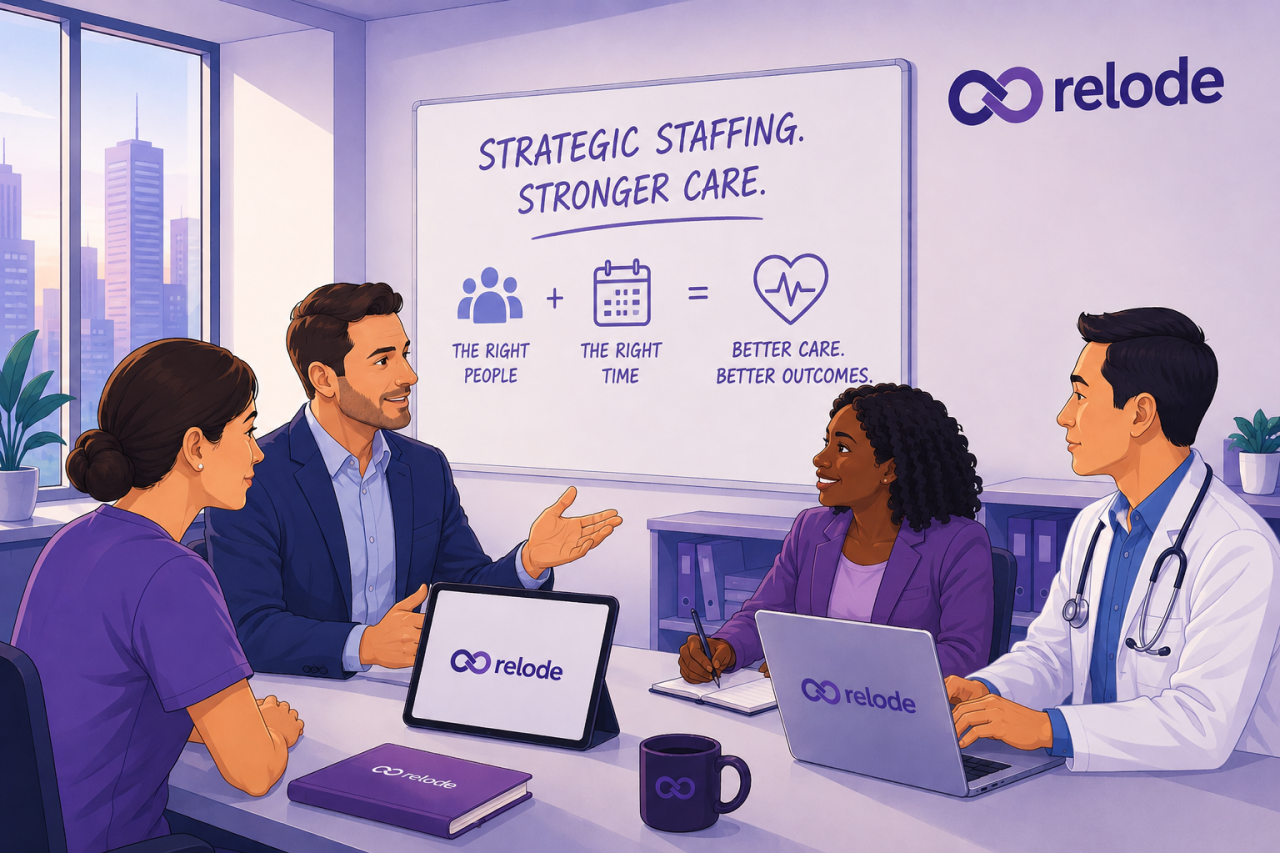
Relode's candidate-matching process is designed around defined job criteria. Its recruiters and network professionals review requisition requirements, identify potential matches and present candidates who meet specified criteria. Relode also describes a verification process for its Relode-Certified Candidates, with employers able to review candidate information before moving to interviews.
Build the APP Role Around the Care Team
APP staffing is ultimately a workforce-design exercise. The growth of NP and PA employment demonstrates that these clinicians will remain an important part of the healthcare workforce. But the BLS projections do not tell an organization which APP to hire, what responsibilities to assign or how a particular role should fit into its clinical model. Those decisions have to come from the organization's patients, services, team structure and regulatory environment.
For hospitals, clinics and health systems, the opportunity is to move beyond “we need an APP” and define exactly what the care team needs.
That means starting with:
FAQs
What counts as an advanced practice provider?
The term APP commonly refers to clinicians who provide medical or advanced clinical care in roles that are distinct from physicians. NPs and PAs are the two primary APP professions discussed in this article. Terminology can vary by organization and jurisdiction.
How does APP scope of practice vary?
Scope of practice is governed in part by state law and can vary by profession and jurisdiction. Employers should verify applicable licensing, collaboration, supervision, prescribing, credentialing and practice requirements before finalizing a role.
Does Relode recruit NPs and PAs?
Yes. Relode provides healthcare recruiting and staffing services that include APP talent, with permanent and flexible staffing options.
What should be defined before recruiting an APP?
Define the patient population, specialty, clinical responsibilities, procedures, schedule, team structure, required experience, state licensing requirements and whether the need is permanent or temporary.
Can APPs work in locum roles?
Yes. APPs can work in temporary or locum arrangements when the role, clinician qualifications, licensing and applicable facility requirements support that arrangement. Relode offers flexible staffing options that include contract and locum opportunities.